Silent Drift: How a Season Without Calibration Quietly Taxes Every Bushel Decision You Make
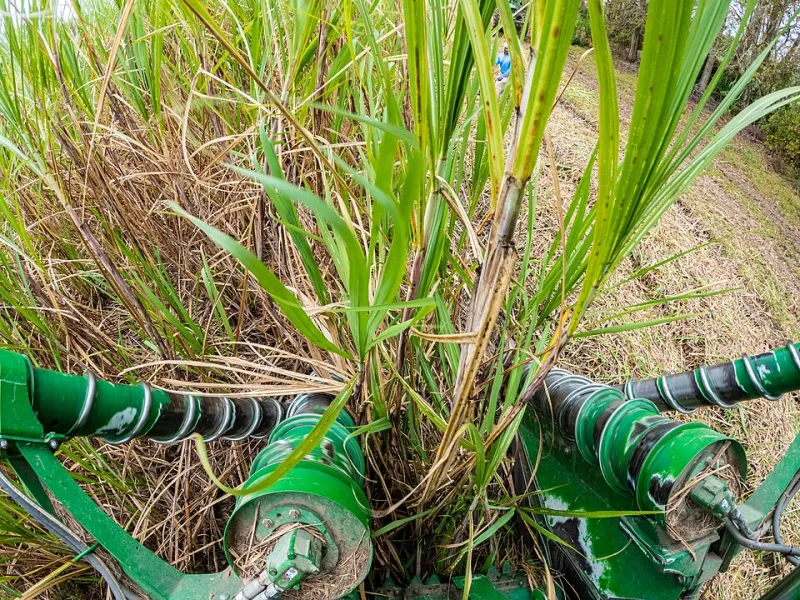
Photo: U.S. Department of Agriculture, Public domain, via Wikimedia Commons
The combine rolled into the shed last November the way it always does — dusted in soybean residue, header unbolted, logbook untouched since August. For Dave Rutmeyer, a fourth-generation grower outside Ames, the yield monitor on that machine had been quietly collecting data for six seasons without a single formal calibration check. The maps looked fine. The numbers looked plausible. That, an Iowa State University Extension engineer told him, is precisely the problem.
"Plausible is the most dangerous word in precision agriculture," she said, walking him through what would become a full-day audit of his monitoring system. "The screen doesn't show you what's wrong. It shows you what you expect to see."
The Slow Leak Nobody Measures
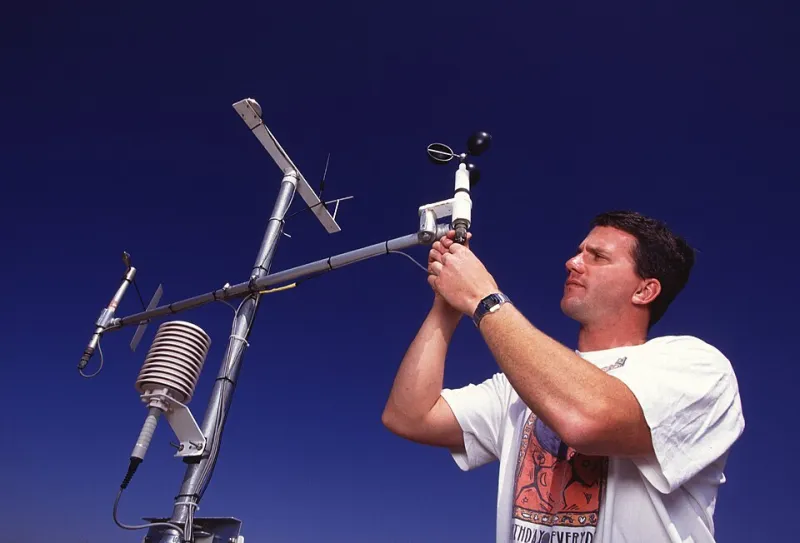
Yield monitors are not fire-and-forget instruments. Moisture sensors drift as dust films their capacitive plates. Mass flow sensors lose sensitivity as impacts on the sensing plate gradually shift the impact force calibration. GPS receivers wander as base station corrections lapse or antenna mounts loosen. None of these failures is dramatic. All of them compound.
Industry estimates and university trials consistently suggest that an uncalibrated monitor can wander 5 to 10 percent off true yield within a couple of seasons — sometimes more after a wet harvest that leaves moisture sensors crusted. On 1,500 acres of 200-bushel corn, a 7 percent error is a phantom 21,000 bushels of noise injected directly into your recordkeeping.
And that noise doesn't stay in the monitor. It flows downstream into the variable-rate prescriptions, hybrid comparisons, and tile drainage ROI calculations that justify six-figure equipment purchases.
Where Bad Maps Bite
Rutmeyer's audit revealed a moisture sensor reading roughly 2.3 points low — a bias he'd been compensating for unconsciously by selling at what he thought was slightly damp grain. Worse, his mass flow calibration dated from a 40-bushel wheat crop, while he'd spent the past three seasons running 220-bushel corn, well outside the calibration range.
The consequences surfaced in his fertilizer program. His co-op had built a variable-rate nitrogen prescription off two seasons of yield data, targeting zones the maps flagged as chronically underperforming. Those zones, it turned out, straddled a calibration artifact — a systematic error that mimicked a real agronomic pattern. He'd been applying 15 to 20 additional pounds of N on ground that didn't need it, roughly $9 an acre across 400 acres, while underfeeding a genuinely marginal area by a similar amount.
"Add it up and I paid about $4,000 in wasted inputs, plus left yield on the table in the low zone," Rutmeyer says. "The calibrator didn't cost twelve grand. The skipping did."
The Seasonal Calibration Audit
Extension specialists recommend treating calibration as a scheduled agronomic operation, not an optional chore. A practical checklist:
Pre-harvest (August–September)
- Verify mass flow sensor calibration against the crop and expected yield range you'll actually harvest
- Clean and inspect the moisture sensor; check for sensor pad wear or grain path obstructions
- Confirm GPS signal integrity and differential correction subscriptions
- Update display firmware and back up previous season's calibration settings
At harvest start
- Run at least three calibration loads across the full expected yield range — low, average, and high — weighing each on a certified scale
- Recalibrate whenever grain moisture shifts more than 5 points or you switch crops
Mid-season
- Spot-check one load per week against the elevator's scale ticket
- Watch for temperature swings; moisture sensors read differently at dawn versus mid-afternoon
Post-harvest
- Compare total monitor bushels against grain sale records; document the variance
- Archive calibration files before any display upgrades
The whole process costs a morning and a few scale tickets. The alternative — recalibrating after the fact from corrupted data — isn't really possible.
The Downstream Bill
The deeper cost of drift shows up in the decisions the data informs. Seed population maps built on noisy yield data get noisier prescriptions. A hybrid trial that looked like a two-bushel winner may be a coin flip. Land rental negotiations built on overstauled productivity indexes can swing thousands of dollars either way.
Researchers who've traced error propagation through variable-rate workflows describe it as a chain: a 6 percent sensor error becomes a 6 percent error in zone classification, which becomes an unknown-but-real error in input allocation. Unlike a broken auger, this failure mode never shuts you down in the field. It just makes you confidently wrong.
Rutmeyer's takeaway is unglamorous but firm. "I'll spend $900 on a planter monitor upgrade without blinking, but I skipped a free afternoon with a scale and a shovel for six years." His calendar now has a standing entry for the last week of August: calibration day.
In precision agriculture, the most expensive data isn't the data you don't collect. It's the data you collect wrong and trust anyway.