Batteries, Refills, and the Real Per-Acre Bill for Drone Spraying
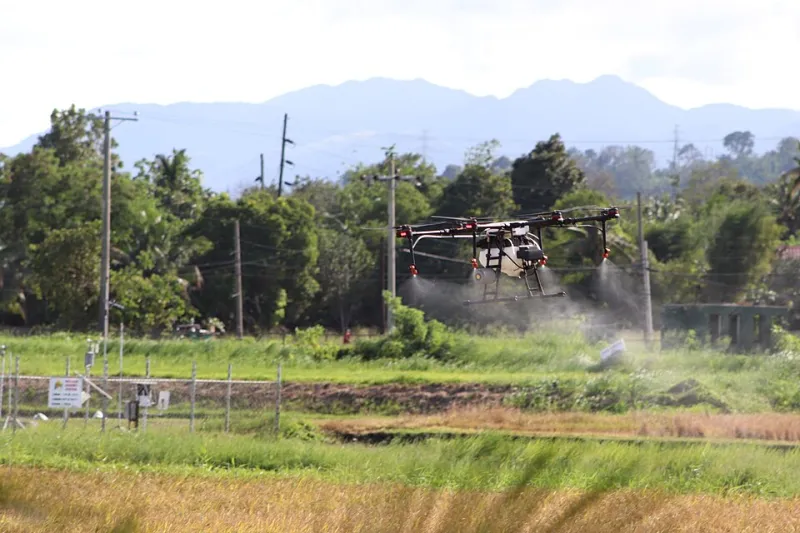
Photo: Christopher Hedreyd - PIA 4A CALABARZON, Public domain, via Wikimedia Commons
A spray drone demo is a controlled performance. The tank is full, the wind is mild, the field is dry, and the battery swap happens off-camera. A real 40-acre fungicide pass is a different accounting exercise. The drone may be efficient. The system around it may not be. For a mid-size US row-crop farm, the useful question is not what the drone can do in a demo. It is what the whole operation costs per acre after batteries, refills, certifications, drift risk, and downtime are counted.
Why Forty Acres Is the Hardest Number
Forty acres is small enough that fixed costs dominate and large enough that logistics matter. A ground rig can cover it quickly, but the grower may not want compaction, may be late in a wet window, or may be trying to reach fields that are soft after rain. A drone avoids those problems. It also introduces a new set of fixed costs: aircraft, batteries, charger, generator, tender trailer, remote pilot, insurance, and certification. Spread those over 40 acres and the per-acre number can look nothing like a vendor's quoted application rate.
The Line Items Vendors Tend to Round
Start with the aircraft. A production spray drone is not a toy, and its useful payload is smaller than the headline number suggests once product, water, and adjuvants are mixed. The aircraft cost is only the first line. Batteries are the second. A working drone may need several batteries per field, and each battery has a finite cycle life. The cost per cycle is not zero, and it is not always disclosed in the service quote.
Charging is a third line. Fast charging draws real power. In a remote field, that means a generator, fuel, and time. If the generator is running while the drone is flying, the cost per hour includes fuel and maintenance. If the drone is waiting on a charger, the cost per acre includes downtime.
Refill logistics are the fourth line and often the largest. A drone does not carry much product. Someone has to mix, stage, and shuttle. That may be a truck, a tender trailer, and a worker. The refill cycle is not just minutes in the air. It is the drive to the field, the mix, the filter check, the rinse, and the spill kit. On 40 acres, the refill overhead can rival the application time.
Certification and insurance are the fifth line. Agricultural drone application in the US falls under FAA rules for agricultural aircraft operations, and the operator needs the appropriate certification and remote pilot credentials. Insurance for aerial application is not optional in practice. Add those costs to the annual ledger even if the drone is contracted rather than owned.
A Ledger You Can Rebuild With Your Own Numbers
A practical break-even template uses five blocks: aircraft or service fee, energy and batteries, product and refill logistics, labor and certification, and risk and downtime. For each block, write down the annual cost and the acres actually treated. Do not use the best-case acreage. Use the acres you can realistically fly in the windows when the field is fit and the weather cooperates.
A simple formula helps: total annual drone cost divided by realistic annual treated acres equals the fixed cost per acre. Add the variable cost per acre for product, refills, and energy. Then compare that number to the ground rig's total cost per acre, including fuel, labor, depreciation, and the value of compaction or timeliness. The comparison is only honest if both sides use the same acreage and the same weather window.
Ground Rig Comparison Is Not Apples to Apples
A ground rig has advantages that a drone ledger should not erase. It carries more product, refills less often, and has a mature operator and insurance market. It also has wheels. In a wet spring or a late fungicide window, the ground rig may not be able to enter the field without leaving ruts or missing the timing. That timeliness premium is real, but it is field-specific. It should be estimated, not assumed.
The drone has its own limits. Wind, temperature inversions, buffer zones, and drift risk all affect the legal and practical application window. A drone that can fly does not always mean a drone should spray. The operator needs a drift management plan, and the grower needs to know who is responsible if product leaves the target area.
The Break-Even Question Before the Contract
Before signing a service contract, ask for the refill plan, the battery plan, the weather-abort policy, and the drift liability language. Ask how many acres the operator can realistically treat in a day, not how many the aircraft can treat in a demo. Ask what happens when a battery fails, a pump clogs, or rain shuts down the window. Those answers belong in the ledger.
Drone spraying can make sense on the right acres with the right logistics. It rarely makes sense as a headline number. The per-acre bill is built from batteries, refills, and unglamorous downtime. Count them before the hype counts you.