Twelve Months on a Refurbished Guidance Rig: A Kansas Grower's Unvarnished Scorecard
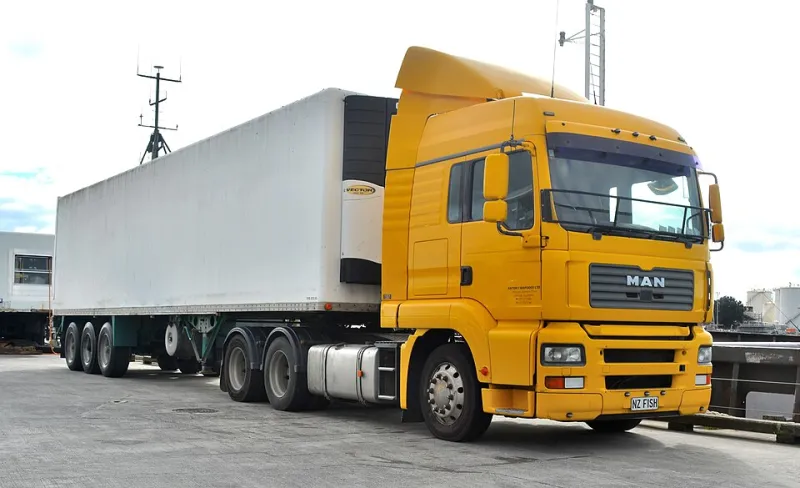
Photo: GPS 56 from New Zealand, CC BY 2.0, via Wikimedia Commons
When Dale Reimer priced a factory-new guidance package for his 2,300-acre operation outside Salina, Kansas, the quote came back north of $28,000 once displays, receivers, and activation fees were tallied. The certified refurbished unit from an independent dealer? Just under $9,500, subscription included for the first year. Skeptical but motivated, Reimer made the deal in February and committed to documenting everything — every pass, every glitch, every dollar — through harvest.
His findings, gathered over a full growing season of wheat, sorghum, and soybeans, offer a rare side-by-side look at what secondhand precision hardware actually delivers when the stakes are real and the neighbors are watching.
Accuracy: Closer Than the Skeptics Admit
The refurbished receiver, a prior-generation RTK unit rebuilt by a third-party firm with a documented 90-point inspection, locked onto correction signals within four minutes of boot-up on its first field day. Over the season, Reimer logged pass-to-pass accuracy averaging 2.1 inches — figures that, on paper, trail the factory-new systems running on adjoining farms by less than an inch.
In practice, that difference was invisible. His 30-foot planter tracked consistent rows through terraced ground, and his autosteer held headland turns without the drift his older manual system had produced. The neighbors' newer units did boot faster and handled satellite dropouts marginally better during a stormy June stretch, but neither factor cost Reimer a single replanted acre.
Downtime: Where the Real Risk Lives
If accuracy wasn't the story, downtime was. Over twelve months, the refurbished system went dark three times. The first failure — a display that refused to power on during wheat planting — cost Reimer a day and a half while the dealer overnighted a loaner. The other two interruptions were software hiccups resolved by phone in under an hour.
His neighbors on factory equipment reported zero hardware failures, though one spent the better part of a morning waiting on a dealer technician for a firmware issue. The lesson Reimer draws is straightforward: refurbished gear shifts risk from the manufacturer's balance sheet to your own schedule. A single-season operation with narrow planting windows should weigh that carefully; diversified operations with flexibility can absorb it.
The Subscription Ledger
Where refurbished setups genuinely shine is recurring cost. Reimer's correction subscription ran $750 annually through the third-party provider — roughly half what the factory network charges for comparable RTK service. His display's unlock codes, purchased outright, eliminated the annual feature-activation fees that quietly add $1,200 or more to ownership on newer platforms.
Over a projected seven-year service life, Reimer estimates total cost of ownership at $14,000 against roughly $38,000 for the new alternative. Even factoring the downtime and one $400 out-of-warranty repair, the arithmetic is not close.
Yield Outcomes: A Wash, As Expected
Harvest data told the least dramatic story of the year. Yield maps from Reimer's fields showed no anomalies attributable to guidance performance — row spacing was uniform, overlaps were minimal, and input savings from reduced double-application matched what his neighbors reported. Precision agriculture's yield benefits, he notes, come from the practice, not the badge on the receiver.
Who Should Buy Refurbished — and Who Shouldn't
Reimer's scorecard, distilled:
- Strong fit: Budget-conscious mid-sized farms, operations adding a second or third guided machine, and growers comfortable performing basic troubleshooting.
- Poor fit: Farms with razor-thin planting windows, single-season cash crops where a lost day is unrecoverable, or operators without a trustworthy dealer relationship.
His bottom line, delivered over coffee after the last load of sorghum left the field: "It's not the system I'd recommend to my most impatient neighbor. But for what I saved, I can absorb a bad day and a half. Most years, I'll come out way ahead."
For American growers weighing the used-equipment market this winter, that trade — modest, manageable risk against a 60-plus percent reduction in capital outlay — is the honest math behind the refurbished guidance decision.