When the Bank Logs In: Data-Backed Lending and the New Fine Print of Farm Credit
The conversation used to start with a balance sheet and a tax return. Increasingly, it starts with a login.
Across the Midwest and High Plains, farm credit officers are requesting access to precision agriculture dashboards — yield monitors, planting records, profitability-by-field reports — as part of the underwriting process. For growers accustomed to annual financing renewals, the request can feel routine. It is anything but.
From Collateral to Clickstream
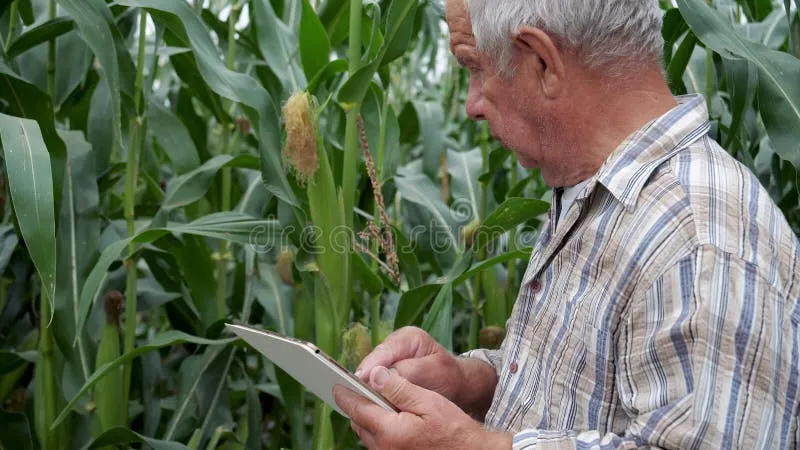
Farm lending has always leaned on records. Sixty years ago, a lender might have asked to see your account books at the local co-op; today, the equivalent is a read-only seat in your John Deere Operations Center or Climate FieldView account. The difference is scope. A ledger showed what you sold. A connected platform shows what you planted, what you applied, what the ground yielded, and — in some cases — what your profit margin was on a per-acre basis, down to the hybrid.
Lenders argue, not unreasonably, that this makes them better partners. A grower who can demonstrate a three-year trend of consistent yields backed by verifiable data may qualify for stronger terms than one presenting a shoebox of elevator tickets. Some community banks and Farm Credit System associations have begun building formal programs around it, treating documented field performance as a form of soft collateral.
But the shift raises questions that deserve scrutiny before any credentials change hands.
What You're Actually Sharing
Authorization language on ag tech platforms is rarely written with the borrower in mind. Before granting a lender access, growers should be asking:
- Scope of access. Is the lender receiving a summary report, or full account visibility? Many platforms allow granular permissions — field-level views, date ranges, specific data layers. Default settings often overshare.
- Duration. Does the authorization expire at loan renewal, or does it persist indefinitely? Some integrations remain active until manually revoked.
- Downstream use. Can the lender aggregate your data with other borrowers'? Can it be sold, licensed, or shared with credit bureaus, insurers, or input suppliers? Read the platform's terms of service, not just the loan agreement.
- Recourse. If a drought year drags down your yield history and the lender responds by tightening terms, what happens to that data the following season? A single bad year is now a permanent, shareable record.
The Insurance Corollary
Crop insurance agents and ag lenders increasingly travel in the same data currents. A yield history pulled from a monitor is more granular — and arguably more persuasive — than an APH database entry. Growers should be aware that what they disclose to one party may inform another, particularly where lenders and insurers share a banking relationship.
Practical Guidance
None of this argues against data-backed lending. For well-run operations, verified performance records can be a genuine competitive advantage in the credit market. But the transaction should be approached with the same discipline applied to any contract:
- Negotiate scope. Provide summaries where full access isn't necessary.
- Put expiration dates in writing.
- Ask the lender, in writing, how your data will be used, stored, and destroyed.
- Keep your own archive. Never let the only copy of your operational history live on someone else's server.
The American farmer has long understood that information is leverage. In the age of digital agriculture, that principle extends past the fence line and into the loan file. The growers who fare best will be those who treat a dashboard login with the same caution they'd treat a lien — because, functionally, that may be exactly what it is.