Signing the Wrench Back Over: A Grower's Field Test of the 2024 Equipment Repair Pacts
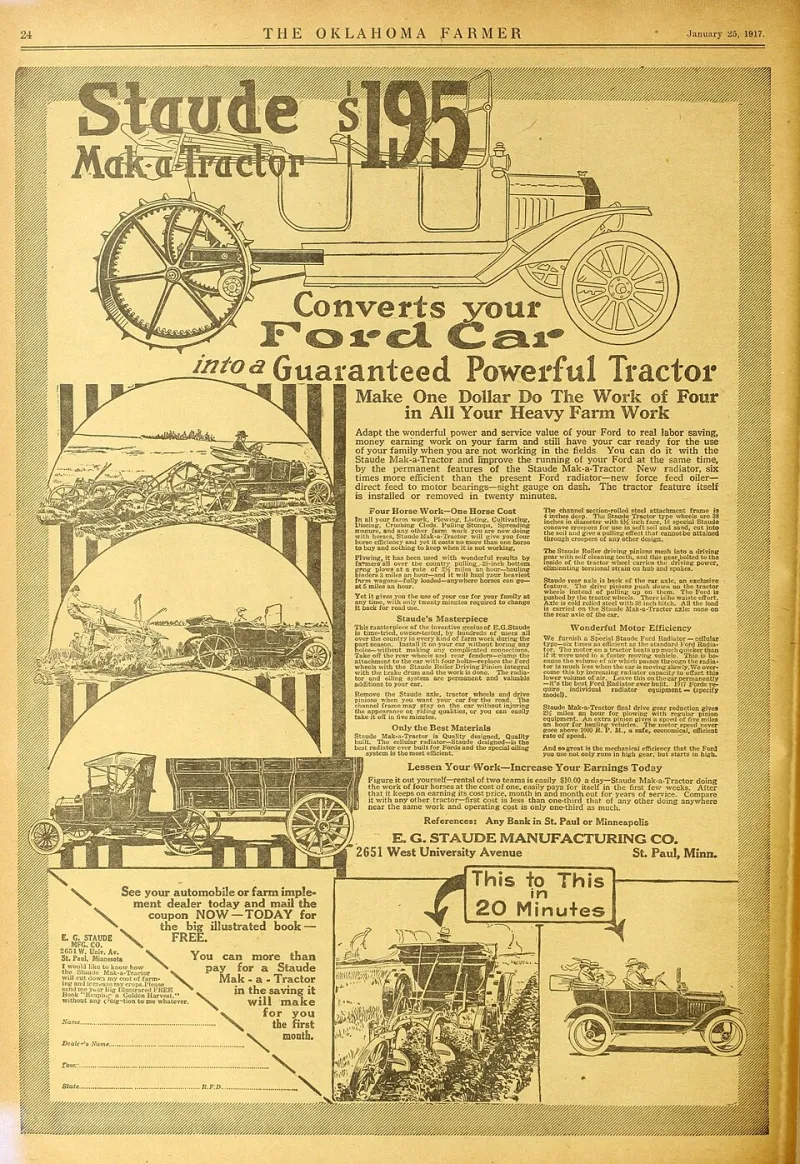
Photo: Internet Archive Book Images, No restrictions, via Wikimedia Commons
For most of the past decade, a broken sensor on a planter during planting season meant one thing: a phone call, a wait, and a bill. That equation began to shift in early 2024, when major manufacturers — most prominently John Deere — formalized new repair agreements with national farm organizations, committing to broader access for owners and independent shops. The question now, months into implementation, is whether the paperwork matches the experience in the shop.
What Actually Changed
The agreements, signed amid mounting pressure from state legislatures and the federal government, commit manufacturers to providing tools, diagnostic software, and repair documentation to farmers and independent technicians. In practical terms, a grower can now obtain the same fault codes and guided troubleshooting procedures a dealer technician uses, and activate many replacement parts without a dealership visit.
That is a genuine departure from the era when a $40,000 combine sat idle because a proprietary lockout required an authorized laptop. Several growers in Iowa and Nebraska told us they completed emissions-system resets and calibration procedures themselves for the first time this year.
The View from the Shop Floor
A central Illinois grain farmer we spoke with described the difference in blunt terms: "Two years ago, a no-code fault on the sprayer meant losing a day. This spring, I pulled the procedure myself and was back in the field by noon."
Not every story is that clean. Growers report that some repairs — particularly those involving controller reprogramming or safety-critical calibrations — still route through dealer channels. Documentation for older equipment remains patchy, and access often requires subscriptions or portal registration that smaller operations find burdensome.
Does It Go Far Enough?
Advocates for right-to-repair legislation in states like Colorado and Minnesota, which have moved on their own frameworks, argue the agreements are a floor, not a ceiling. Voluntary commitments, they note, can be revised or withdrawn, and enforcement mechanisms are thin.
Manufacturer representatives counter that the agreements reflect a durable shift in policy, driven by customer loyalty as much as regulation. There is some evidence for this: the cost of locking out owners has risen alongside the reputational cost.
What Farmers Should Do Now
For growers weighing equipment purchases, the practical advice is straightforward. Ask what diagnostic access is included before you sign. Document repair times and costs to build a record of whether access is real. And for multi-generational family farms, treat repair capability as part of the succession plan — the shop that can fix its own machines is worth as much as the machines themselves.
The 2024 agreements did not end the right-to-repair debate, but they moved the starting line. Whether the next harvest season proves them durable will depend less on signatures than on how many farmers never have to make that phone call again.