Before the Algorithm, There Was the Notebook: Old-Fashioned Farming's Digital Second Act
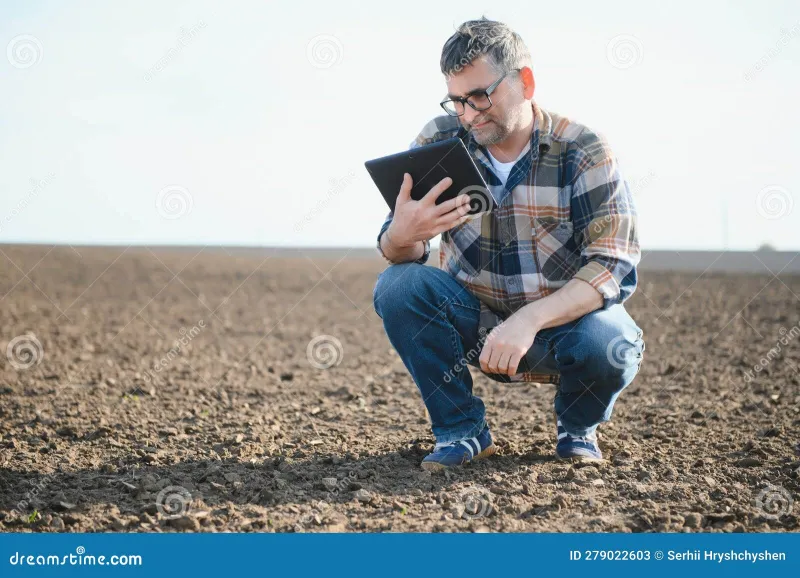
Photo: elderly farmer notebook field young farmer tablet, via thumbs.dreamstime.com
There's a particular tension at a lot of American kitchen tables right now. One generation wants to talk about soil zone maps and satellite imagery; the other remembers their father walking the back forty with a shovel and a feel for the dirt. The conversation too often turns into technology versus tradition, as if the two were opponents.
They aren't. Look closely at what precision agriculture actually does, and you'll find that most of it is an attempt to digitize what good farmers have always done. Here are five heritage practices that turned out to be precision ag strategies all along.
1. Grandfather's Seed Book Was Variable-Rate Seeding
Older farmers kept notebooks: this bottom ground grows taller corn, that sandy knoll burns up in August. They planted accordingly — heavier populations on the good ground, lighter on the marginal acres — because seed cost money and the ground told them what it could support.
Variable-rate seeding prescriptions are the same judgment, executed at a resolution no notebook could match. The soil sensor didn't invent the idea of matching population to productivity. It just made the intuition measurable, repeatable, and fast enough to cover 4,000 acres before planting season slips away.
2. Fence-Line Grazing and Cover Crop Zoning
Farmers who ran livestock always knew which fields took and gave differently. They wintered cattle on the rougher ground, kept the best acres for row crops, and let manure build fertility where it was needed. Nothing about that was written down as a zone management plan, but that's exactly what it was.
Modern cover crop zoning — seeding different mixes or termination dates across management zones — formalizes the same principle. The technology contribution is precision, not philosophy.
3. The Rain Gauge on the Porch Was On-Farm Data Collection
Every old farm had a rain gauge, a calendar, and somebody who wrote down the date the oats went in and what the yield was. That ledger, kept faithfully for thirty years, was a dataset — crude, but honest, and accumulated at exactly one location that mattered.
Yield monitors and cloud-based records do the same work at 900 data points per acre. The grandfather with the ledger and the agronomist with the yield map are engaged in the same project: learning what this particular piece of ground does over time. The digital version just removes the arithmetic errors and survives the attic.
4. Reading the Weeds Was Early Scouting
An experienced farmer could drive past a neighbor's field at 45 miles per hour and tell you what was coming — which herbicide program was slipping, which fields would need a second pass. That observational expertise was real agronomy, learned over decades and applied in real time.
Today's imagery alerts and machine-learning weed detection are, again, the same skill scaled up. The satellite doesn't out-think the veteran scout. It simply never sleeps, never drives past, and covers the acres the scout can't reach before the window closes.
5. Saving Seed and Memory Was Genetic Selection
Before hybrid catalogs and trait packages, farmers saved seed from their best-performing rows and, over a generation, bred corn suited to their own ground. That was on-farm research and product selection, done the slow way.
Modern growers run replicated seed trials and let the planter's data system rank hybrids by actual field performance. Same question, same method — which seed wins on my farm? — with the experiment finished in a season instead of a decade.
Why This Matters at the Kitchen Table
Framing precision agriculture as a continuation rather than a replacement changes the generational conversation. The younger grower isn't saying the old way was wrong; they're saying the family's accumulated knowledge deserves better tools. The older generation isn't being displaced — their notebook is becoming the baseline that makes the algorithm useful.
The best data platform in the world can't substitute for knowing a farm. And the best-run farms have always known that. Precision agriculture, at its best, doesn't replace the grandfather's judgment. It gives that judgment a bigger memory.