The Map That Lied: Auditing a Variable-Rate Prescription Before It Costs You a Season

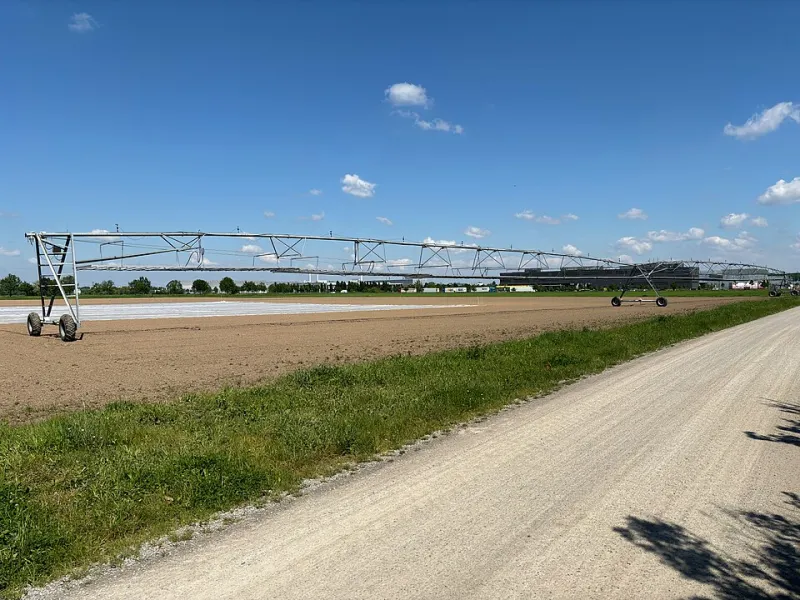
Photo: USDAgov, Public domain, via Wikimedia Commons
The invoice arrived in March, the same as it had for three years running: a variable-rate phosphorus prescription built from grid sampling, formatted for the co-op's applicator, ready to load. The grower in east-central Illinois—who asked not to be named because his agronomy contracts prohibit it—approved it the way most of us approve things in March, on trust and time pressure. By August, the story the map told no longer matched the story the crop was telling. High-pH knobs that should have received 40 pounds of product got 90. Ground that needed a bump got nothing. The over-application alone, he estimates, ran close to $40,000 across 1,800 acres once you counted wasted product, application passes, and the yield drag in fields where the prescription starved the crop.
His case is not exotic. It is the ordinary failure mode of precision agriculture: not a dramatic breakdown, but a quiet corruption of the data layer underneath every downstream decision.
Where the Error Entered the System
Forensic reconstruction of his prescription pointed to three compounding problems, none of which would raise an eyebrow on its own.
First, the grid sampling itself was stale. The underlying data was four years old, collected during a wet fall when parts of the field were sampled from the wrong coordinates because the sampler was working around mud. Soil chemistry does not move quickly, but four years of harvest removal plus a pH drift event can shift a zone meaningfully.
Second, the zone logic had been flipped. Management zones were supposed to be built from yield history overlaid with EC readings. Somewhere in the processing chain—whether a shapefile was uploaded mirrored or a legend was misread during zone assignment remains disputed—the high-productivity zones inherited the attributes of the low-productivity ones. The prescription was internally consistent. It was consistently wrong.
Third, the vendor's agronomist reviewed the map for 'reasonableness' at a rate of roughly 90 seconds per field. At that pace, an inverted zone structure on a field the reviewer had never set foot on is essentially invisible.
A Pre-Flight Audit Any Grower Can Run
The frustrating part of this story is that a thirty-minute audit would likely have caught the problem. Growers adopting variable-rate programs should treat every prescription like a pre-flight checklist.
Sanity-check the extremes. Pull up the prescription and sort the rates. If your best dirt is scheduled to receive the highest P and K rates while your worst acres get the least—without a documented agronomic reason such as buildup strategy—stop and ask why. Inverted logic is the single most common catastrophic error.
Compare against removal math. Take last year's yield map, multiply by nutrient removal coefficients, and see whether the prescription's totals land in the same universe. If the map recommends applying more phosphorus than the crop could have removed in two seasons, something upstream is broken.
Verify the coordinate system. Mismatched projections—UTM versus State Plane, NAD83 versus WGS84—can shift a prescription by hundreds of feet. Overlay the prescription polygons on an aerial image of your own field. If the boundaries don't sit where your fence lines do, you have found a problem worth a phone call.
Check the controller handshake. Rates that look correct in the office can be scaled wrong at the monitor—pounds per acre versus pounds per 1,000 square feet, kilograms versus pounds. One calibration pass with a known rate check catches this before the applicator covers a section.
Demand the source data. A vendor who cannot or will not provide the underlying sampling results, zone definitions, and the recommendation algorithm's logic is asking you to underwrite their process blind.
The Liability Question Nobody Wants to Answer
When the Illinois grower sought recourse, he discovered what many have before him: the contract allocates risk entirely to the customer. The standard agronomy services agreement he signed included a limitation of liability capped at the fees paid for the prescription itself—in his case, under $4,000 for the season. It also classified the prescription as a 'recommendation' rather than a 'service outcome,' placing the duty of verification squarely on the grower.
This is the industry norm, not an anomaly. Most major providers and co-ops draft agreements that disclaim consequential damages, cap recovery at service fees, and require disputes to proceed through arbitration in a venue chosen by the vendor. A grower who suffers six figures of damage from a bad map will, in most cases, recover the cost of the map.
The practical implications are unglamorous but real. Keep your own copies of every data layer and prescription. Document verbal approvals and changes in writing. Ask before signing whether the provider carries errors-and-omissions insurance and whether they will name you as an additional insured on claims arising from their work. Some regional independents will negotiate this; most national platforms will not.
Trust, Verified
None of this argues against variable-rate technology. Applied well, VR fertility remains one of the clearest return-on-investment plays in precision agriculture, and this same grower is running prescriptions again this season—under a new provider, with an audit checklist he now runs himself.
The lesson is the one precision agriculture keeps teaching in its second decade: the technology works, but the wrapper around it—data hygiene, verification, contract terms—is where seasons are won or lost. A prescription is not an answer. It is a hypothesis wearing a spreadsheet, and it deserves the same scrutiny you would give any salesman standing at the shop door with a pitch that sounds too good to check.