Two Generations, One Field: Making a 1988 Planter Speak to a 2024 App
Photo: Benjamin Cole, Public domain, via Wikimedia Commons
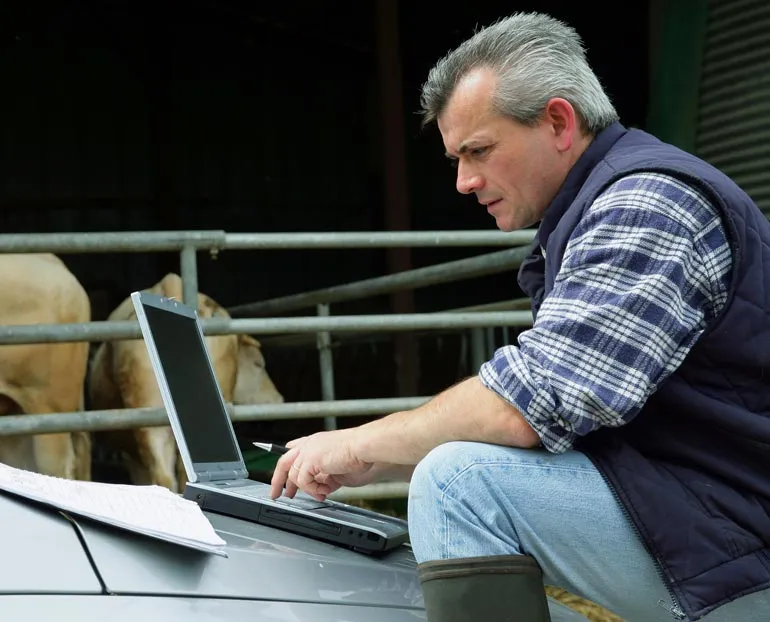
On a Tuesday morning in eastern Nebraska, a fourth-generation grower pulled up her field records on a tablet while her father finished greasing a planter that rolled off the assembly line before she was born. Neither of them found the scene unusual. Increasingly, neither does American agriculture.
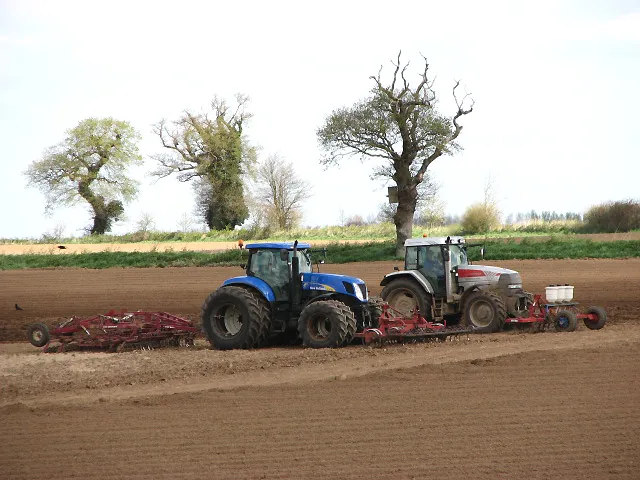
Across the Corn Belt and the Plains, family operations are running equipment spanning three or four decades of engineering — and pairing it with software that gets updated more often than some of that iron has been repainted. The result is a working compromise that no manufacturer designed and no dealer demoed: the hand-me-down fleet, held together by patience, adapters, and a willingness to argue at the kitchen table.
The Analog-Digital Divide Is Real — and Expensive to Ignore
The core challenge is straightforward. A planter built in the late 1980s was engineered for a mechanical world: ground-driven meters, cable linkages, and a seat-of-the-pants operator making rate decisions by feel. A modern agronomy app, by contrast, expects data — population, downforce, seed spacing — delivered automatically and continuously.
When the two meet without an interpreter, growers face a choice. They can run the old machine blind, treating the digital tools as paperwork for crop insurance and lenders. Or they can invest in retrofit hardware that translates between eras.
"We weren't ready to trade a planter that still plants straight," one Ohio grower put it. "But our agronomist wanted population maps, and our lender wanted yield history. The old planter didn't speak either language."
Retrofitting the Middle Ground
The most common bridge is an aftermarket monitor. Aftermarket rate controllers, clutch-equipped meters, and GPS-based display units can turn a mechanically driven planter into a data-producing one for a fraction of replacement cost — often in the range of a used pickup rather than a new tractor.
The typical retrofit path looks like this:
- A modern display mounted in the cab, running guidance and logging as-planted data
- Electric or hydraulic row clutches that give the monitor actual control over seeding rates
- A GPS receiver feeding row-by-row information to the display and, from there, to the cloud
- A connectivity plan, whether that's a cellular hotspot or a manual USB transfer at the shop
The result is a machine that is neither fully old nor fully new. Operators describe it as giving a familiar horse a new bridle: the field work feels the same, but the paperwork generates itself.
Where the Generations Disagree
The hardware is often the easy part. The harder negotiation is cultural, and it plays out on thousands of family farms every season.
Older operators tend to trust what they can see and touch. A monitor alarm suggesting uneven spacing may lose out to the memory of a stand that looked just fine in 1997. Younger family members, meanwhile, may treat the dashboard as gospel without understanding the mechanical realities that produce its numbers.
Family operations that navigate this well tend to follow a few patterns:
- Defined roles rather than generational turf. One person owns the data pipeline; another owns the machine. Neither second-guesses the other mid-season.
- Shared calibration sessions. When the older generation helps verify that a monitor reading matches what's actually in the seed trench, trust builds in both directions.
- Written agreements on what gets recorded. Deciding in February what the app must capture prevents June arguments about whether it matters.
"The fight isn't about the app," one Iowa farm wife observed. "It's about whether forty years of experience counts as data. We finally decided it does — we just write it down now."
The Unexpected Wins
For all the friction, growers report genuine payoffs from pairing old iron with new software.
Retrofitted planters routinely reveal problems the operator had been compensating for unconsciously — a worn meter on one row unit, a chain that slips at higher speeds, a row that's been overplanting for years. Fixing those issues often pays for the retrofit hardware within a season or two through seed savings alone.
There's also a succession benefit that rarely shows up in a budget. When the farm's records live in a shared system rather than in one person's memory, the next generation's learning curve shortens. Data becomes a common language between a father who knows every fence line and a daughter who can read a variable-rate map.
And in an era of tight margins, keeping a sound thirty-year-old machine in service with a few thousand dollars of electronics is often the most defensible line item on the whole capital budget.
Practical Advice for Mixed-Era Fleets
Growers considering the hand-me-down route offer consistent guidance:
- Verify compatibility before buying. Not every older planter accepts clutch kits cleanly; check serial numbers and meter types first.
- Budget for the display as a long-term asset. Unlike the planter, the monitor can move to the next machine — and the next generation.
- Keep one analog backup. A hand-seeded test strip or a counted row tells you whether the electronics are telling the truth.
- Document the hybrid system. When the retrofit is eventually sold or inherited, a written record of what was installed and why is worth real money.
Old Iron, New Language
The hand-me-down fleet isn't a compromise American family farms settled for — it's a strategy they're refining. A generation of growers is proving that the divide between grandpa's planter and grandkid's app isn't a wall. With the right translation layer in the cab, it's just another field boundary to cross.