Two O'Clock in the Morning and the Machine Is Still Going: Inside the Unmanaged Hours of Automated Farming
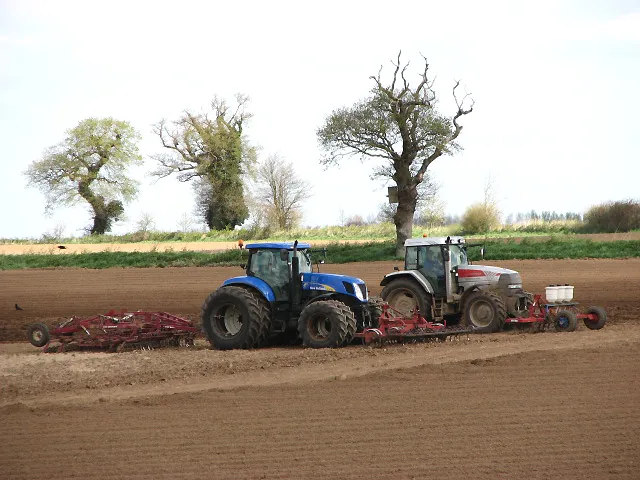
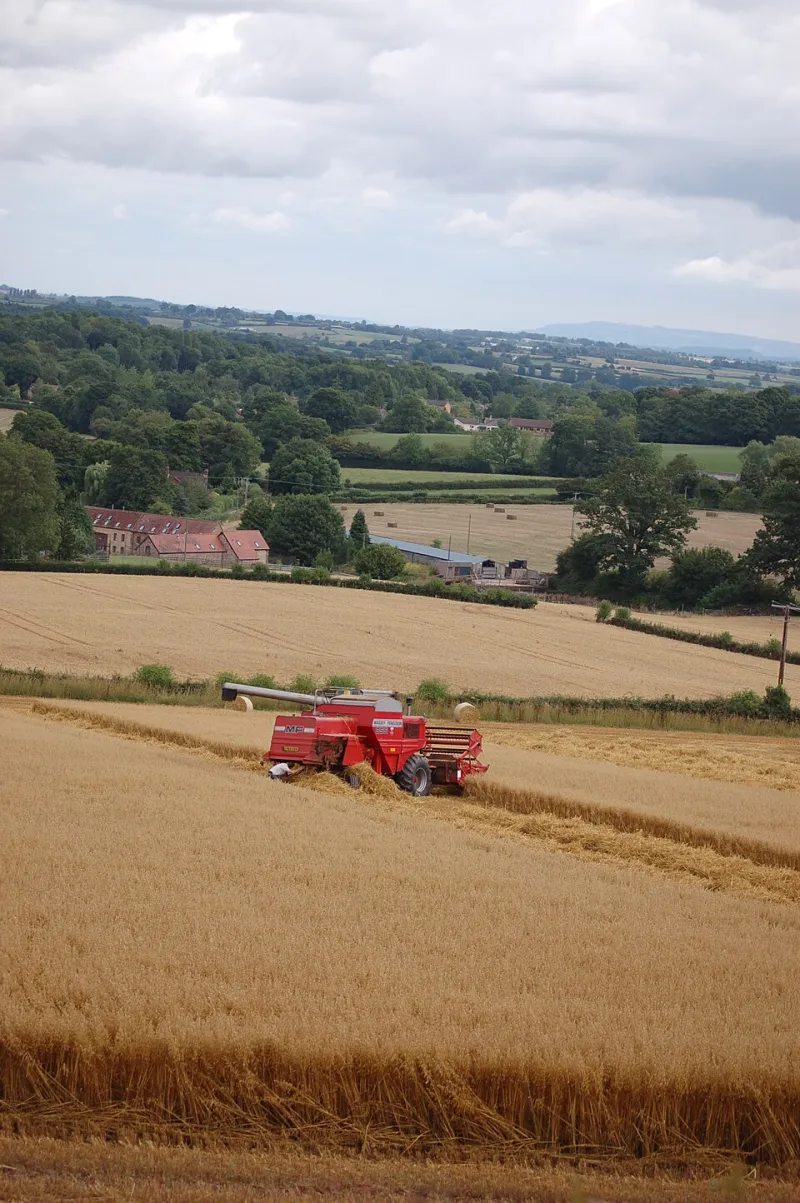
Photo: Evelyn Simak, CC BY-SA 2.0, via Wikimedia Commons
The planter doesn't know what time it is. At 2:14 AM, somewhere between the third and fourth pass across an 80-acre field in central Illinois, the guidance line holds steady, the row units hum, and the cab is dark except for the green glow of a monitor. What the machine also doesn't know is whether the person sitting in it — or the person asleep in the farmstead a quarter mile away — is in any condition to notice when something goes wrong.
That gap between what automation can do and what it can be trusted to do unsupervised is the quiet fault line of modern precision agriculture. And it gets tested most often in the hours nobody likes to talk about.
The Promise Versus the Pumpkins-and-Coffee Reality
Autosteer was sold, reasonably, as a fatigue-reduction tool. RTK and satellite-guided steering took the white-knuckle work out of long passes, and for daytime operations it delivered. But planting windows and spray cutoffs don't respect business hours. When a rain event is 36 hours out and 400 acres remain, the night shift becomes the only shift.
Spend enough midnights around guided equipment and a pattern emerges: very few growers are running fully autonomous passes, and most know they shouldn't be. What they're actually running is machine-guided, human-supervised work — the operator awake in the cab, hands rarely on the wheel, eyes frequently on the row units.
What Fatigue Does to a Supervised System
The uncomfortable truth is that autosteer doesn't eliminate operator fatigue; it changes its shape. Steering is no longer the task — vigilance is. And vigilance at 3 AM is a losing proposition for the human brain regardless of how good the guidance line is.
Experienced operators describe a kind of micro-sleep economy: the machine handles the straight lines while the person fights to stay alert for the exceptions. Seed tender jams, hydraulic faults, a planter box running dry on the outside rows, a pivot road crossing that never made it into the guidance map. None of these are steering problems. All of them are 2 AM problems.
The industry's own research on automation — borrowed heavily from trucking and aviation — suggests that the more reliable the automation, the faster human attention degrades. A perfect guidance system may actually make an exhausted operator less prepared for the moment it hands control back.
Connectivity Dropouts: The Midnight Blind Spot
Then there's the signal. RTK corrections, remote-viewing apps, telematics dashboards — the entire promise of monitoring a pass from the kitchen table depends on connectivity that rural America still can't guarantee. A dropped correction signal at noon is an annoyance. The same dropout at 2 AM, with no one in the cab, can mean a planter drifting quietly off its AB line for several passes before anyone notices.
Growers who run overnight passes describe a checklist culture that has developed informally: boundary lines flagged in person, headlands mowed wide, remote cameras positioned at known problem spots, and a hard rule that someone — anyone — checks the monitor feed at regular intervals. It is a workaround economy, built by farmers, for the gaps the technology hasn't closed.
The Liability Question Nobody Has Fully Answered
Legally, the overnight supervised pass exists in gray territory. Insurance policies generally contemplate an operator in the cab. What happens when the operator is asleep in the truck at the end of the field, or monitoring from a couch two miles away? What happens when an autonomous-capable machine strikes a tile probe, a fence line, or worse, a person?
Manufacturers have been careful with their language: supervised autonomy, operator-present operation, driver-monitoring systems. The fine print consistently places responsibility with the human. That means the grower running a 2 AM pass is not just fighting fatigue — they are personally underwriting the risk that their judgment, at their most tired, will be found adequate after the fact.
Some farm bureaus and risk-management specialists now advise growers to document their overnight protocols: who is monitoring, how often, what triggers an immediate shutdown. It's the kind of paperwork that feels absurd at planting speed and indispensable after an incident.
What the Machine Still Can't Judge
Ask any operator what automation can't do and the answers come fast. It can't smell a hydraulic line running hot. It can't hear the change in a planter's rhythm when a closing wheel starts dragging mud. It can't look at the sky and decide that the dew is heavy enough to compromise a burndown application, or notice the neighbor's dog on the headland, or make the call that this pass is good enough and the rest can wait for daylight.
These are small judgments, but they compound. A season is built from hundreds of them. The technology handles the geometry; the human handles the meaning. At 2 AM, that division of labor is exactly what keeps the operation safe — and exactly what makes full overnight autonomy, for most American farms, a premature leap.
Managing the Shift Nobody Manages
The growers who run overnight passes successfully treat them like any other shift: planned, staffed, and bounded. Rotating operators, scheduled cab checks, pre-mapped boundaries, and a firm stop time are not signs of technological distrust. They are the management layer the machines don't ship with.
Autosteer has genuinely changed the arithmetic of the planting season, and growers who adopt it wouldn't go back. But the honest accounting includes the hours it creates as much as the hours it saves. The night shift is real work. The machines make it possible. People still have to make it safe.